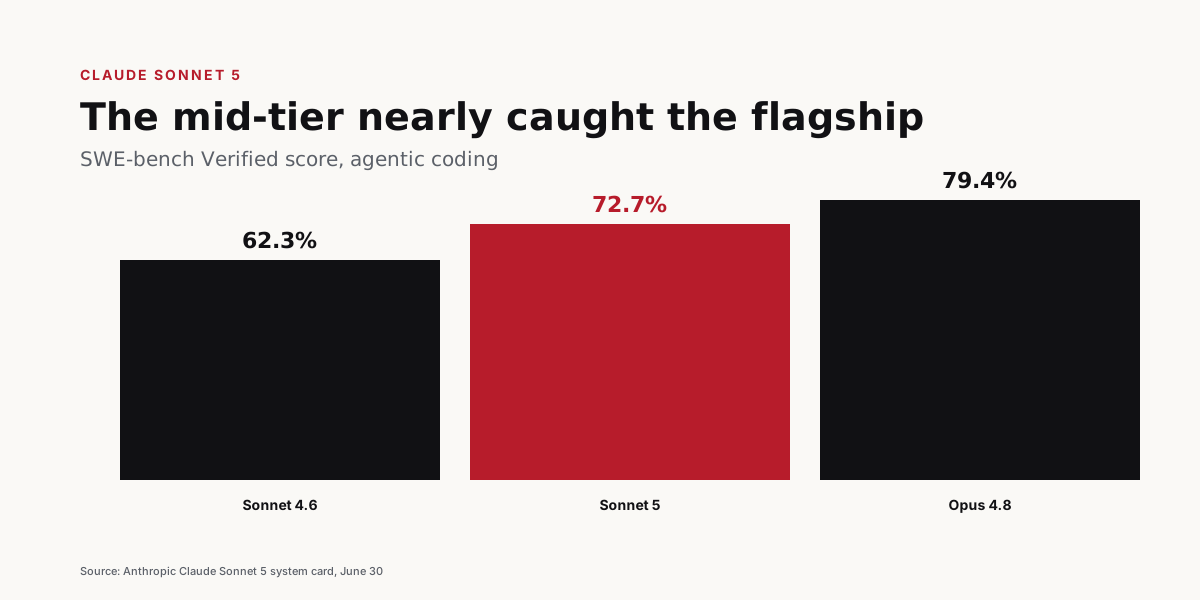
Anthropic released Claude Sonnet 5 on June 30, its most agentic Sonnet model, per the company. It scored 72.7% on SWE-bench Verified, up from Sonnet 4.6's 62.3% and close to Opus 4.8's 79.4%. Introductory pricing is $2 per million input tokens and $10 per million output through August 31, then $3 and $15, per TechCrunch. Anthropic is positioning it as a cheaper way to run agents.
The gap closed on real agentic work. Terminal-bench, which measures multi-step coding in an actual terminal, jumped to 76.1% from Sonnet 4.6's 55.4%, a 20.7-point move in one generation. That is the benchmark that tracks whether a model can run an agent loop without a human catching its mistakes, and it is where the mid-tier historically fell apart. Sonnet 5 lands most of Opus 4.8's capability at roughly a quarter of the output-token cost. For anyone running agents at volume, the per-task economics just shifted, because the model you reach for by default now does work that required the flagship two quarters ago.
Tier compression is the pattern here. Each generation, the mid-tier absorbs most of the prior flagship's capability while the price stays at mid-tier levels. That is bad news for anyone whose business depends on charging flagship prices for flagship performance, and it is part of why the same week saw open-weight challengers winning developer volume on price. The capability that used to justify a premium is becoming the commodity floor. Model selection should be re-benchmarked every quarter, because the cost-optimal choice for a given task keeps moving down a tier.
Bottom Line
Sonnet 5 puts near-flagship agentic coding at mid-tier pricing, which resets the cost math for anyone running agents at scale. Re-run your model-selection benchmarks this month; the cheap option probably got good enough.