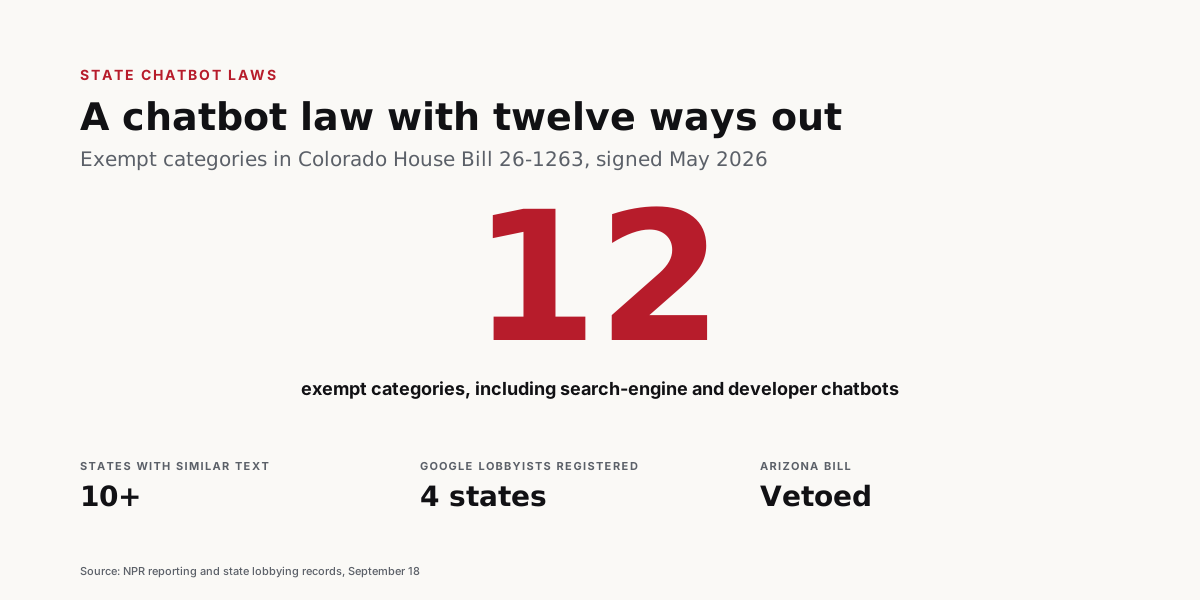
Google lobbyists registered on chatbot bills in Iowa, Colorado, Nebraska, and Arizona, and Hawaii Representative Trish La Chica says Google provided the framework for her state's bill early in the session, per NPR. NPR found similar language in bills across at least ten states. Colorado's bill became law in May 2026. Arizona's version was vetoed by Governor Katie Hobbs in June.
The exemptions decide who the law covers. Colorado's version carves out twelve categories, among them chatbots housed within search engines, products for developers and researchers, commerce and customer-service assistants, voice-activated assistants, and features embedded inside other applications. Set against the market, the search-engine carve-out covers Gemini, and the developer-tool language reaches ChatGPT, Copilot, and Claude. The statute also requires "technically feasible" measures against sexual content while leaving companies to define feasibility.
Advocates quoted by NPR describe a law that exempts the products it names. Marjorie Connolly of the Tech Oversight Project says parents are being asked to accept a chatbot law that exempts chatbots. Laura Marquez-Garrett of the Social Media Victims Law Center says a feasibility defense creates an exception with no equivalent elsewhere in law. Healthier Colorado, which backed the Colorado bill, acknowledged working with Google while denying the bill was industry-written.
Wednesday's EU Kids Act proposal runs the other way on scope. It names AI chatbots that give minors mental-health or personal-development advice, and its exclusions stop at education and public authorities. US state laws are arriving first and covering less, so a company shipping one assistant into both markets will find its binding obligations in Brussels.
Bottom Line
Chatbot compliance now turns on which carve-out your product lands in, state by state. Map your assistant against Colorado's twelve exemptions before assuming the law reaches you, and plan for the EU text to be the stricter one.