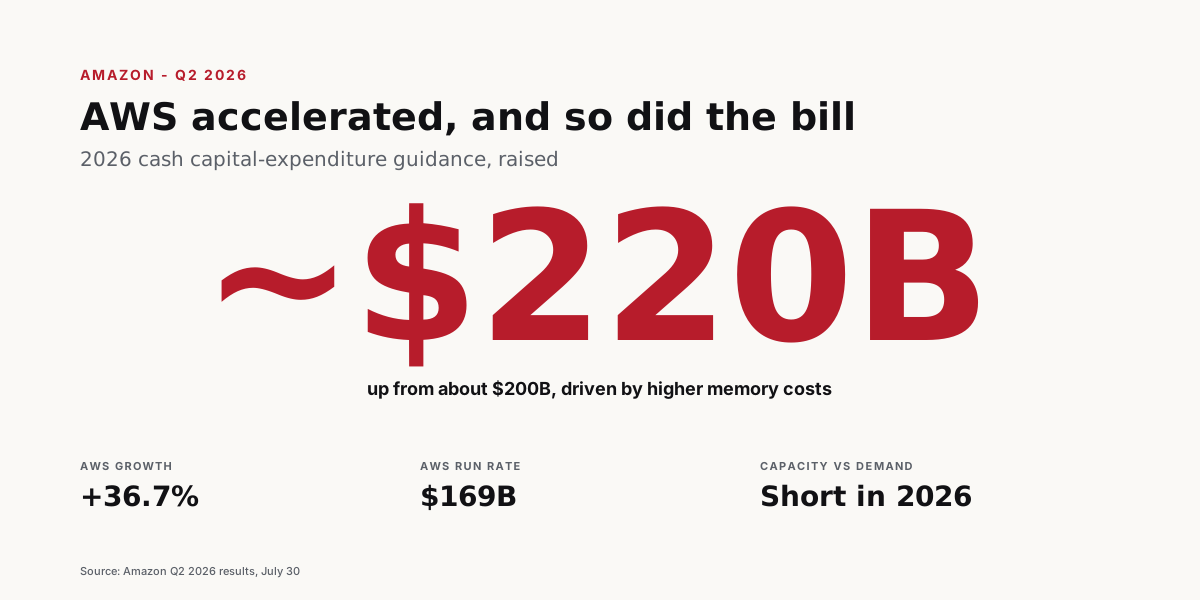
Amazon reported Q2 revenue of $200.6 billion, up 20%, with operating income of $27.5 billion, up 43%, per CNBC. AWS grew 36.7% to $42.2 billion, a $169 billion annualized run rate and an acceleration from the 28% it posted in the first quarter. Amazon then raised 2026 cash capex guidance to roughly $220 billion from about $200 billion, attributing the increase to higher memory costs, and said capacity will not meet all of this year's demand, per Seeking Alpha.
The line worth pulling out is why capex went up. Not a decision to build more, but the same buildout costing more, because memory got expensive. That connects directly to Micron's quarter and to the HBM shortage we have tracked all year. When the memory makers have pricing power, every hyperscaler's capex line inflates whether or not it adds a single rack. Amazon just put a $20 billion number on that pass-through, which is the clearest read yet on how much of the AI buildout's cost inflation is a memory story rather than a compute one.
The other admission is the important one for anyone buying cloud capacity. Amazon said it will not have enough capacity to meet 2026 demand and described 2027 and 2028 demand as substantial. AWS accelerating to 36.7% while the company says it is still short tells you the constraint is supply, not customer appetite. Coming a day after the market rewarded Microsoft for Azure at 43% and punished Meta for spending without a visible revenue line, Amazon landed on the right side of the same test: the capex went up, but so did the revenue that justifies it.
Bottom Line
Amazon raised capex $20 billion because memory got more expensive, not because it changed the plan. Watch memory pricing as a direct input to every hyperscaler's capex guidance from here.