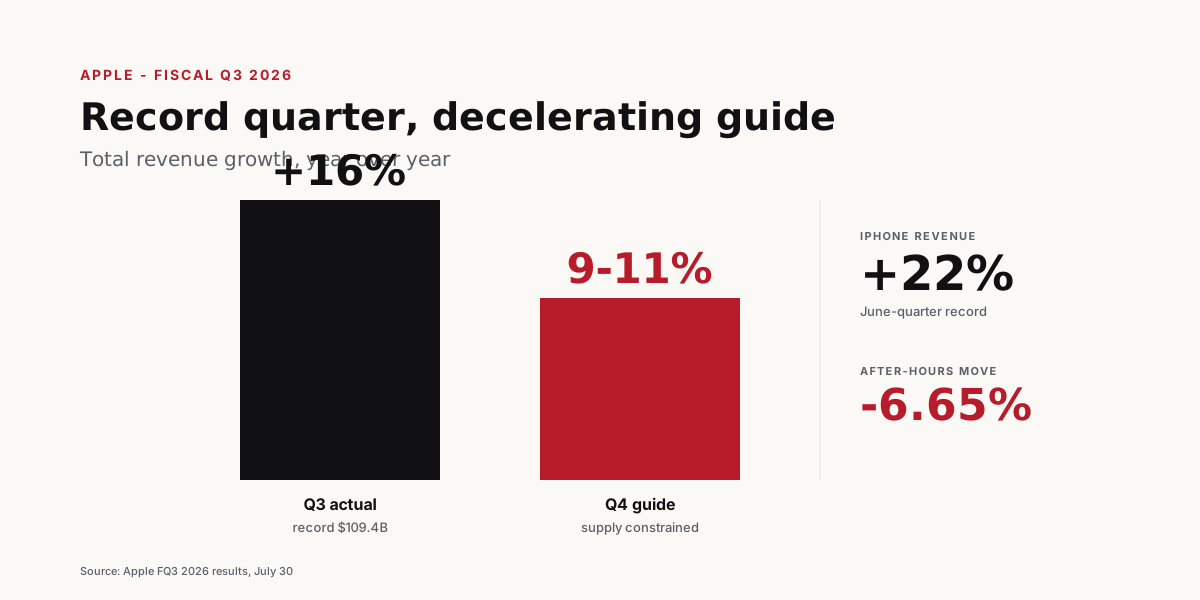
Apple reported record fiscal third-quarter revenue of $109.4 billion, up 16%, with iPhone revenue up 22% to a June-quarter record of $54.3 billion and Mac up 29%, per CNBC. The stock then fell about 6.65% after hours, because Apple guided September-quarter revenue growth to 9% to 11% and said supply constraints will increase significantly across iPhone, Mac, and iPad, per the earnings call coverage.
Hold on to Tim Cook's characterization. He described the constraint as a demand forecast issue, with no conventional shortage behind it, meaning iPhone and Mac sold better than Apple planned for, so the company under-ordered components. That is a better problem than weak demand, but it lands in a market where memory is scarce and expensive, and Apple competes for the same supply the hyperscalers are bidding up. When Amazon raises capex $20 billion citing memory costs, Apple is buying in that same market for devices with fixed retail prices.
That is the squeeze the guidance reflects. Growth decelerating from 16% to a 9%-to-11% range, with supply constraints widening across three product lines, means Apple expects to leave sales on the table into the holiday quarter. Unlike a cloud provider, Apple cannot pass component inflation through in real time without repricing hardware, which it did earlier this year on MacBook and iPad. A 6.65% drop on a record quarter is the market pricing the constraint.
Bottom Line
Apple sold more than it could supply and expects that gap to widen into the holiday quarter. Watch whether it takes another price increase or accepts thinner margins, because the memory market is not loosening.