
The Justice Department is investigating whether Nvidia structured its roughly $20 billion licensing agreement with Groq to avoid antitrust review and has sent the company a formal demand for information, per Bloomberg, following a New York Times report on September 9. The inquiry began after the deal was disclosed in late December. Groq described it as a non-exclusive license to its inference chip technology; CEO Jonathan Ross and COO Sunny Madra then joined Nvidia. Nvidia called the arrangement an example of the American system "working as designed," per SDxCentral.
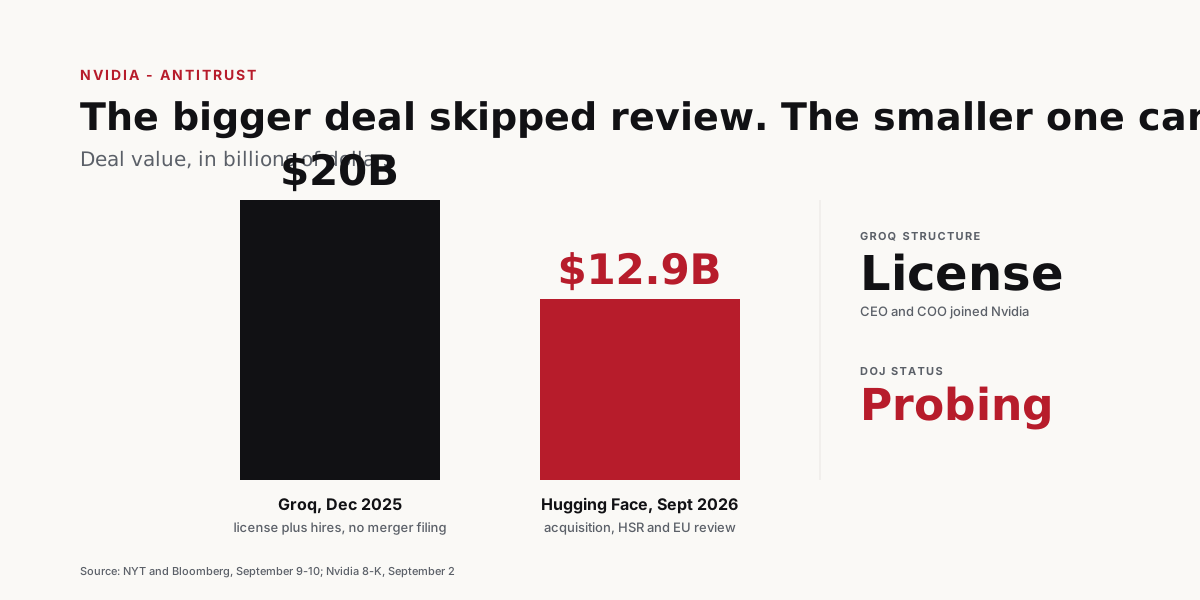
At $20 billion, Groq was the larger deal and triggered no merger filing in the United States, the EU, the UK, or China. At $12.93 billion, Hugging Face is the smaller one and must clear Hart-Scott-Rodino and a European filing. Three days after we set those two side by side, the Justice Department asked whether the first structure was designed to avoid the review the second cannot. US agencies will now weigh the Hugging Face filing while one of them examines whether Nvidia routed around the process last time.
The probe sits inside a wider push. The FTC is examining acqui-hire structures broadly, and chairman Andrew Ferguson has said the agency wants to make sure such deals aren't a way around merger review. Microsoft with Inflection, Amazon with Adept, and Google with Character.AI all used versions of license-plus-talent, and Senators Warren and Blumenthal put the question to Nvidia directly in March.
Officials do not currently expect an unwind, and a fine is possible. The inquiry could also close with no action. If the realistic downside is a fine, license-plus-hires still pays for a buyer Nvidia's size: the technology and team stay put, and the penalty becomes a transaction cost. A fine large enough to change that arithmetic, or an agency seeking structural relief, would end the design's appeal.
Bottom Line
Regulators now formally treat the Groq structure as a possible route around review, just as the Hugging Face deal enters the conventional process. Watch the size of any penalty, because it will tell every large buyer whether license-plus-hires stays cheaper than a real merger filing.