
Nscale is in talks to raise up to $3.5 billion ahead of a planned New York listing: about $1.5 billion in convertible notes and roughly $2 billion from Nvidia, per TechCrunch citing Bloomberg. The British AI infrastructure company was founded in 2024, raised a $155 million Series A that December, and took a $1.1 billion Series B led by Aker in March. It now claims roughly $103 billion in projected revenue from signed leases, up from about $51 billion a month earlier.
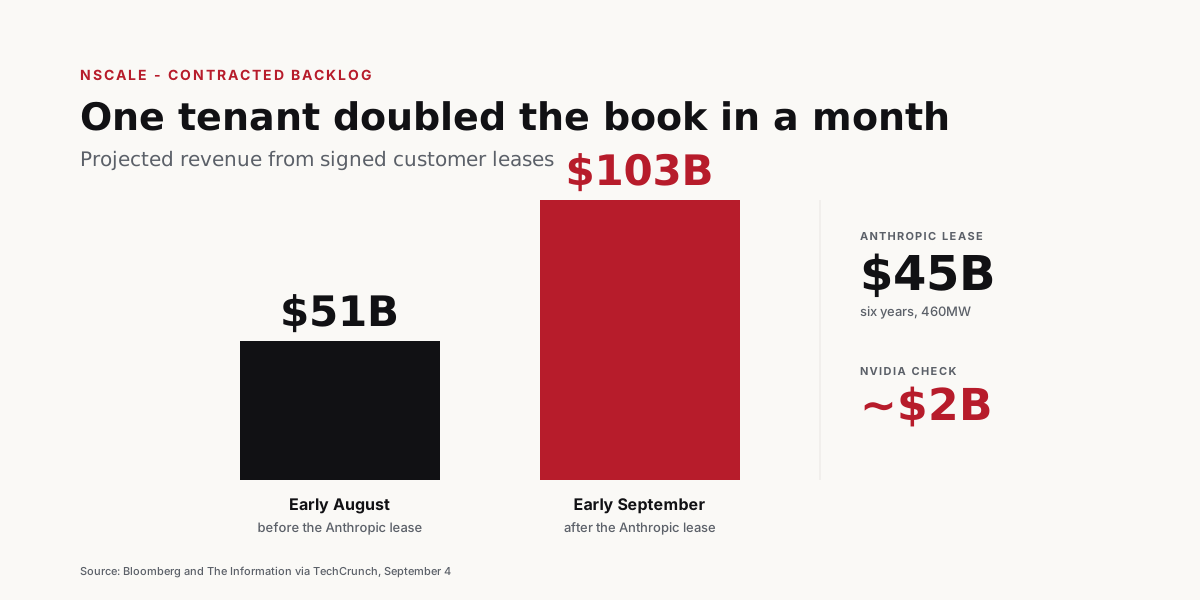
One tenant did most of that. Anthropic agreed in late August to spend about $45 billion over six years for 460 megawatts at Nscale's Monarch Compute Campus in West Virginia, running Nvidia's Vera Rubin systems, per The Tech Capital. The backlog figure is projected from lease terms, and phase one of the campus is due in the first half of 2028. Microsoft signed a letter of intent for the same site in March and walked over the summer. The best-capitalized buyer in the market passed on the ground that now anchors a $103 billion book. Convertible holders and IPO buyers should size the concentration before they size the total.
Then there's Nvidia's check. The chip vendor would put roughly $2 billion into the landlord deploying its systems for a tenant buying its compute, the same loop as the up to $105 billion Nvidia is backing for OpenAI's Ohio build. Vendor financing is common in capital equipment. It speeds deployment, books as vendor revenue what began as vendor capital, and holds as long as end demand grows into the capacity.
Bottom Line
A $103 billion backlog resting mostly on one six-year lease is a concentration story first. Watch the S-1 for customer concentration and the split between contracted and projected revenue, and count Nvidia's check as part of the demand picture, since Nvidia profits from the capacity it funds.