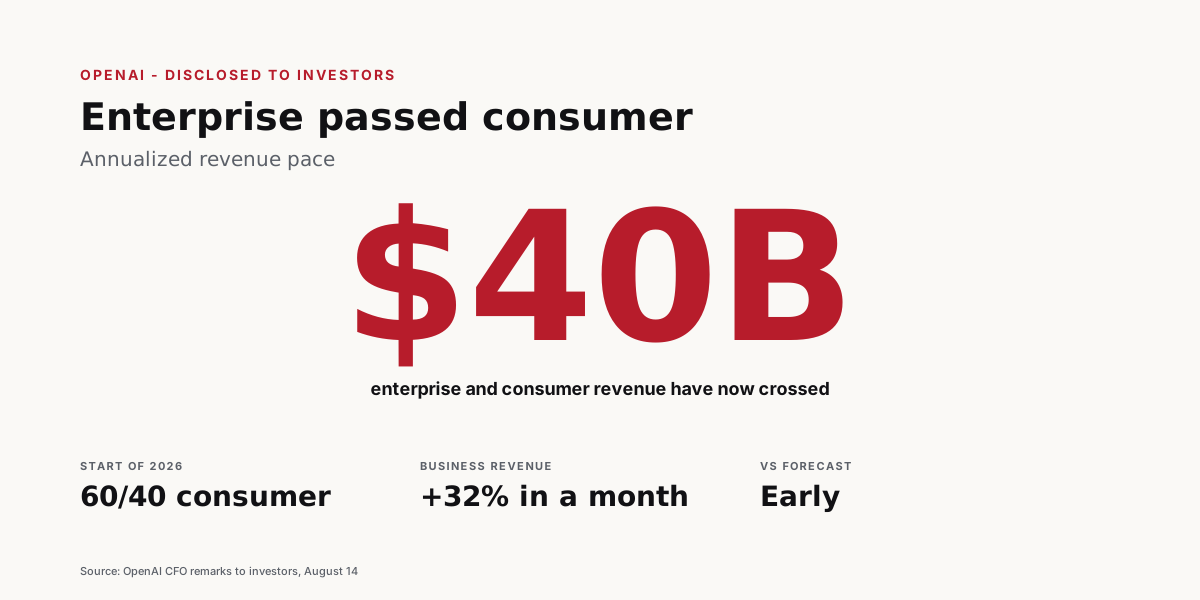
OpenAI CFO Sarah Friar told investors on August 14 that enterprise and consumer revenue have now crossed, with the business side larger for the first time, per CNBC. The company entered the year at roughly a 60-40 split favoring consumer. It is now running at a $40 billion annualized revenue pace, and business customer revenue rose 32% in a single month. Friar had previously guided to parity by the end of 2026, so the crossover arrived early.
The mix shift moved from 60-40 to crossed in about eight months. A mix does not move that fast because one side slowed. It moves that fast because enterprise is compounding at a rate well above a consumer business that is itself still growing quickly. ChatGPT built the brand and the distribution; the revenue base underneath it has quietly become corporate contracts.
For the listing this changes the story materially. OpenAI was reported to be pushing its IPO into next year after watching SpaceX trade poorly post-debut. Public investors pay differently for the two kinds of revenue. Consumer subscriptions carry churn and discretionary risk and get valued accordingly. Enterprise revenue is contracted, expands within accounts, and supports the retention math that software multiples are built on. A company going public on a majority-enterprise base can argue for a different comparable set than one going public on subscriptions.
Two cautions belong on these figures. They are company disclosures to investors, with no audited filings behind them, and an annualized pace is a run rate, well short of a year of collected revenue. A 32% jump in one month is also the kind of figure that can reflect a few very large contracts landing together.
Bottom Line
The mix flipped faster than OpenAI's own CFO expected, which strengthens the case it takes to public markets. Watch whether enterprise growth holds its rate for two more quarters, because a run rate built on lumpy contracts is a different asset than one built on many renewals.