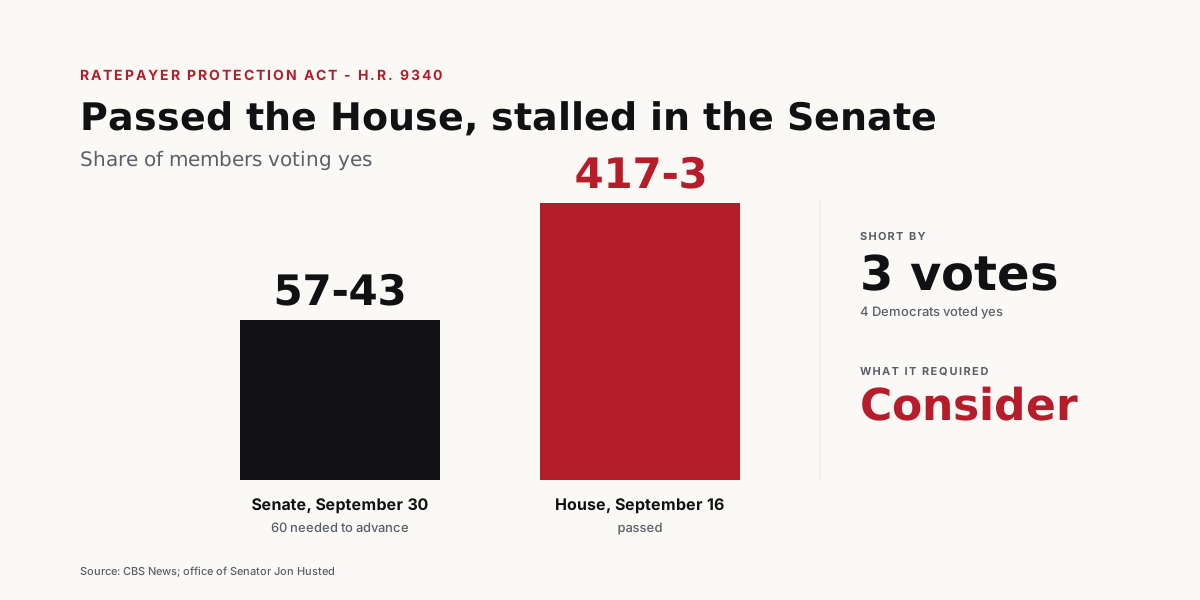
The Senate voted 57-43 on September 30 on the Ratepayer Protection Act, three short of the 60 needed to advance it, per CBS News. The bill is H.R. 9340, led in the Senate by Jon Husted of Ohio. It passed the House 417-3 on September 16, per Husted's office. Four Democrats voted yes: Maggie Hassan, Amy Klobuchar, Jon Ossoff, and Raphael Warnock.
The bill covers large electricity users such as data centers. It directs state utility commissions to consider a standard under which those users pay the full incremental cost of the generation and transmission built to serve them. Consider is the operative verb. A state commission could review the standard and decline to adopt it. The bill sets no federal rate rule.
That gap is why it failed. Minority Leader Chuck Schumer called the bill "totally optional," and Democrats described it as a messaging bill. Senator Martin Heinrich has a competing proposal with enforcement behind it. Husted's office says the White House would have signed H.R. 9340. The coverage we reviewed described no next step for either bill.
The stall leaves the question with the states, which is where cost allocation gets set anyway. State commissions approve large-load tariffs, and county boards decide zoning. We have covered both, including Frederick County's rejection of a data center agreement. For a data center developer, the binding terms sit in the utility's tariff docket. For a household, the rate case at the state commission decides the bill.
Bottom Line
A bill that passed the House 417-3 died in the Senate over one verb. If you build or finance data centers, plan for cost allocation to be decided state by state, and read the large-load tariff before you sign for a site. If you want to know whether your power bill rises, follow your state utility commission's docket.