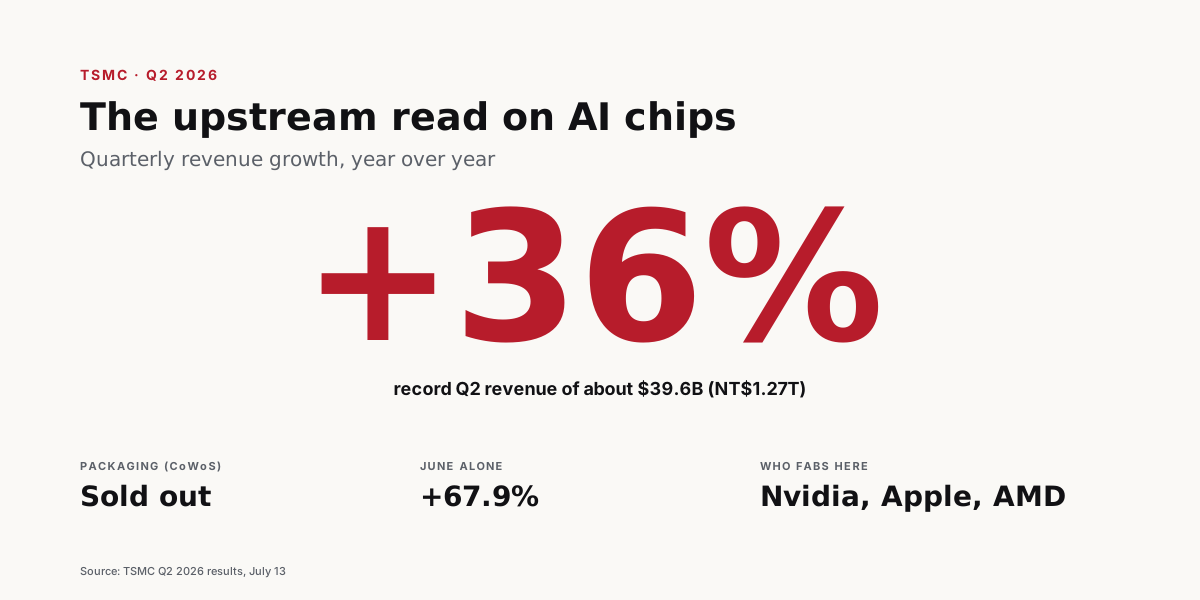
TSMC reported second-quarter revenue of NT$1.27 trillion, about $39.63 billion, up 36% year over year and near the top of its guidance range, per Taipei Times. AI-related chip demand drove the print, and June revenue alone rose 67.9% from a year earlier to an all-time monthly high. First-half revenue reached NT$2.40 trillion, up 35.6%, per the results coverage.
The line most coverage buried is the capacity one: N3 manufacturing and CoWoS advanced packaging are both sold out through the end of the year. That capacity actually governs AI hardware supply. Nearly every leading AI accelerator gets fabricated and packaged at TSMC, including Nvidia's Blackwell and Rubin parts, the hyperscaler ASICs from Broadcom and Marvell, OpenAI's new Jalapeño chip, Apple's silicon, and AMD's Instinct line. When TSMC says packaging is sold out, the ceiling on how many AI accelerators the industry can ship this year is already set, regardless of how much any single vendor wants to build. TSMC's 36% is the cleanest read on aggregate AI-chip demand because it sits upstream of every vendor's product mix.
The strategic read is that TSMC, more than any GPU vendor, is the true bottleneck of the AI buildout. Capital can fund data centers, power can be contracted, models can be trained, and none of it ships without wafer starts and packaging slots from one company in Taiwan. That concentration is the supply risk sitting under the entire AI trade, and it is why CoWoS capacity expansion matters more in TSMC's guidance than the revenue headline everyone quotes.
Bottom Line
TSMC's 36% growth is the least noisy proxy for the whole AI-hardware cycle, and its packaging lines are sold out through year-end. To know how many AI chips ship in 2026, watch TSMC's CoWoS capacity over any one vendor's launch.