
Four consumers who subscribe to AI services sued Anthropic, OpenAI, SpaceXAI, and Google in federal court in San Francisco on September 18, per Bloomberg Law. Charles Buist and Nick Spetsas of Florida and Cheyenne Hunt and Christine Bullock of California allege the companies violated Section 1 of the Sherman Act by agreeing to slow how fast their models improve, per Latin Times. They seek treble damages, an injunction, a declaratory judgment, and certification of a nationwide class.
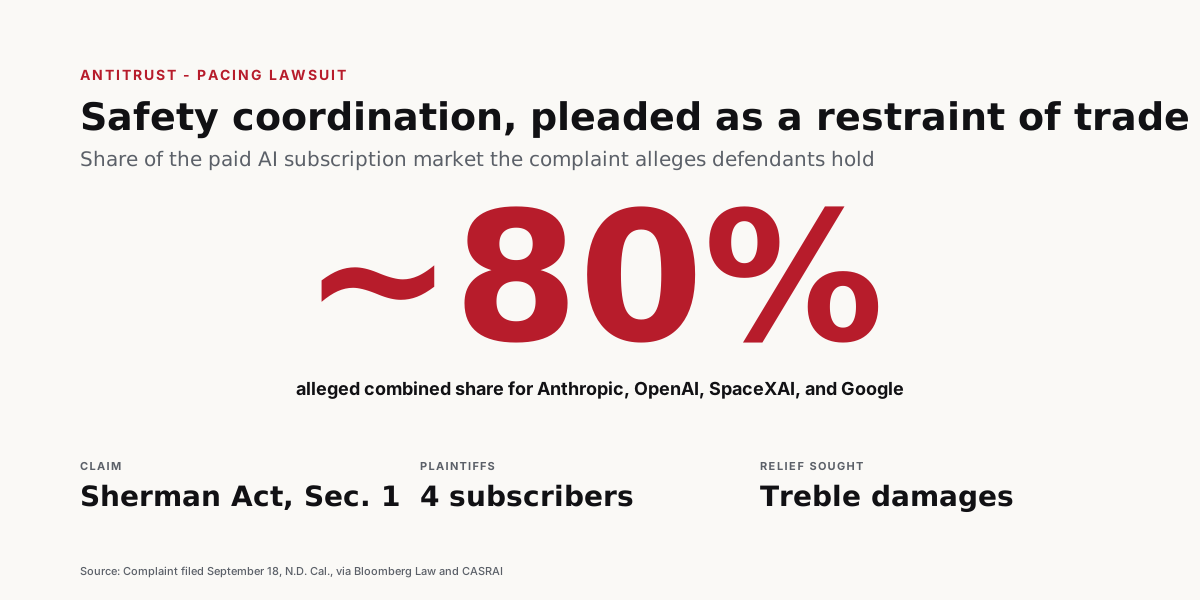
This is a complaint, and its facts are allegations. No class has been certified. No defendant has answered. The theory treats an agreement among rivals to reduce product quality and the rate of improvement as an agreement to restrict output, pleaded as per se unlawful, under quick-look review, and under the rule of reason, per CASRAI's analysis. The complaint says it does not challenge any company's unilateral safety decisions, which confines the case to coordination.
The evidence is the sequence we covered on September 15. Dario Amodei published "We Must Pace the Frontier" on September 12, and Sam Altman, Elon Musk, and Demis Hassabis endorsed it within the hour. The complaint also cites a confirmation that OpenAI had worked with Anthropic and Google DeepMind for several weeks, and alleges the defendants hold about 80% of the paid AI subscription market. The defense has text of its own to point at: a footnote in Amodei's essay says the coordination step depends on government mediation or antitrust waivers.
CASRAI's analysis identifies no safety-specific antitrust exemption, which is why the essay flagged waivers in the first place. For the labs, the practical effect arrives before any ruling. Joint pacing commitments now carry litigation risk, so expect them to route through government or standards bodies.
Bottom Line
A consumer class action has turned the pacing pledge into a Sherman Act question. Until a court rules on a motion to dismiss, expect frontier labs to keep safety coordination inside government-run processes, where antitrust exposure is lower.