Executive Order 14434, titled Inaugurating the Era of Super Intelligence, was signed on September 29 and published in the Federal Register on October 2, per the White House. It directs the executive branch to use "Super Intelligence" and "SI" in place of "Artificial Intelligence" and "AI." It also says agencies will not acknowledge the usage of the older terms "in any applicable setting."
The order covers what agencies write from now on: official correspondence, public communications, websites, reports, policy documents, and other non-statutory documents. It applies "to the maximum extent permitted by law." Statutes that say artificial intelligence keep their wording. Agencies are not required to change regulations, presidential actions, contracts, grants, or other documents already issued.
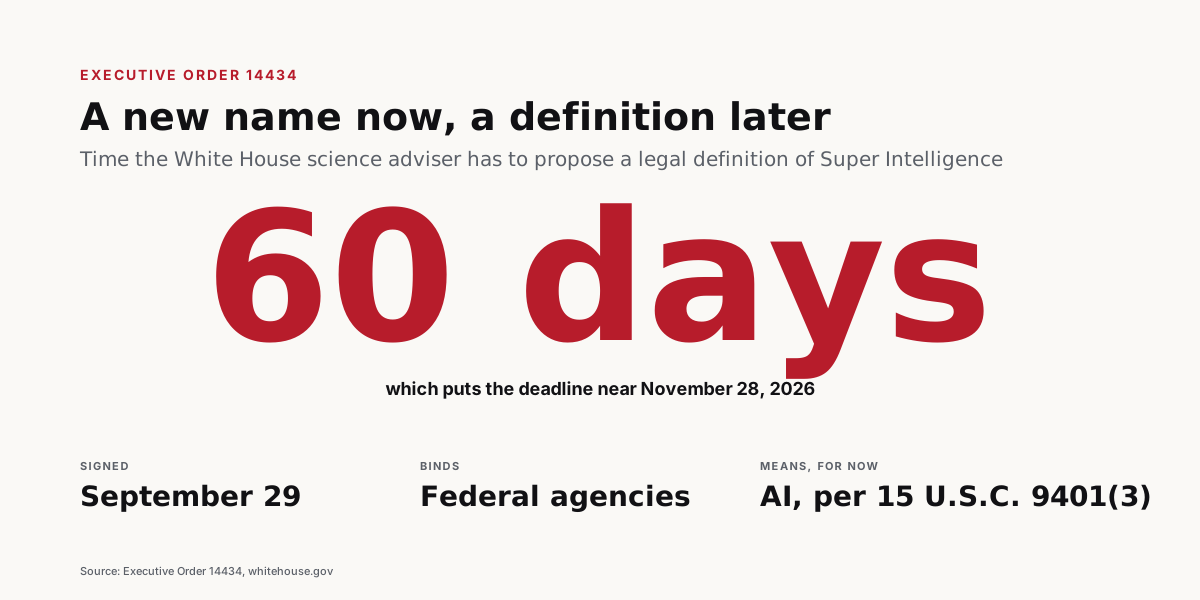
The new term has no meaning of its own yet. The order defines Super Intelligence as the technologies and systems covered by "artificial intelligence" in 15 U.S.C. 9401(3), the existing federal definition. That holds until a later presidential action or an act of Congress replaces it. Michael Kratsios, the Assistant to the President for Science and Technology, has 60 days to send the president proposed legislative language for a federal definition. That puts the deadline near November 28. The proposal must say whether the new definition should modify, expand, or replace the existing one.
Three limits matter for companies. The order sets no requirements for contractors, grantees, or private firms. It creates no enforceable rights. It changes no state law. Compliance teams will see "SI" in federal material while their contracts and policies still say "AI," which the IAPP describes as managing two vocabularies. The Justice Department has told employees to use the new language, per Fast Company. The task force named after the term is covered in our explainer.
Bottom Line
The order changes the government's vocabulary and nothing in your contracts. If you work with federal agencies, map SI to AI in your policy library and search alerts, and keep "AI" in any document tied to a statute or an existing agreement. A proposed legal definition is due around November 28, and that text could change which systems the rules reach.