Two former Groq engineers sued the company's board in the Delaware Court of Chancery over its $20 billion arrangement with Nvidia, in a complaint filed October 2, per CNBC. Joshua Rubin and Benjamin Serebrin left Groq before the deal and kept their stock. They allege the board skipped a stockholder vote that Delaware law requires and failed to get the best price for the company's assets.
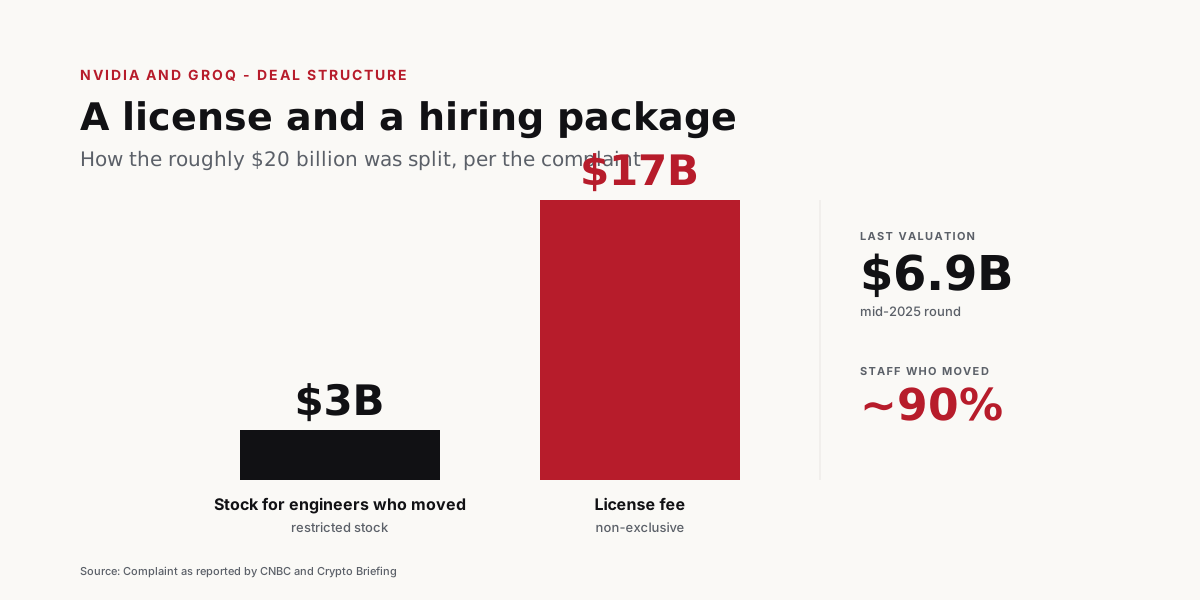
The complaint turns on the structure. Nvidia paid about $17 billion for a non-exclusive license to Groq's inference technology and set aside about $3 billion in restricted stock for the engineers who moved over. About 90% of Groq's employees went, including founder Jonathan Ross, per Crypto Briefing. Groq stayed behind as an independent company with a new chief executive. The plaintiffs say the arrangement squeezed out common stockholders, whose stake stayed in a company that had licensed its technology and lost most of its staff.
Groq calls the suit "meritless" and says the agreement delivered "exceptional value." The company last raised money at a $6.9 billion valuation in mid-2025, so $20 billion was close to three times that mark. The plaintiffs call it a lowball price anyway. They argue an open sale process would have produced more. None of the allegations have been tested in court.
This is the second legal front for the same deal. The Justice Department is examining whether the license-and-hire structure avoided a merger filing, which we covered on September 10. The antitrust question is whether the deal was an acquisition in substance. The Delaware question is whether it was a sale of the company in substance. A yes to either changes how labs and chipmakers structure the next talent deal.
Bottom Line
A license plus a hiring package avoided a merger filing and a stockholder vote, and both gaps are now being challenged. If you hold common stock in a startup, check what your charter says about asset sales and licensing, because that language decides whether you get a vote. If you are structuring one of these deals, price in the litigation.