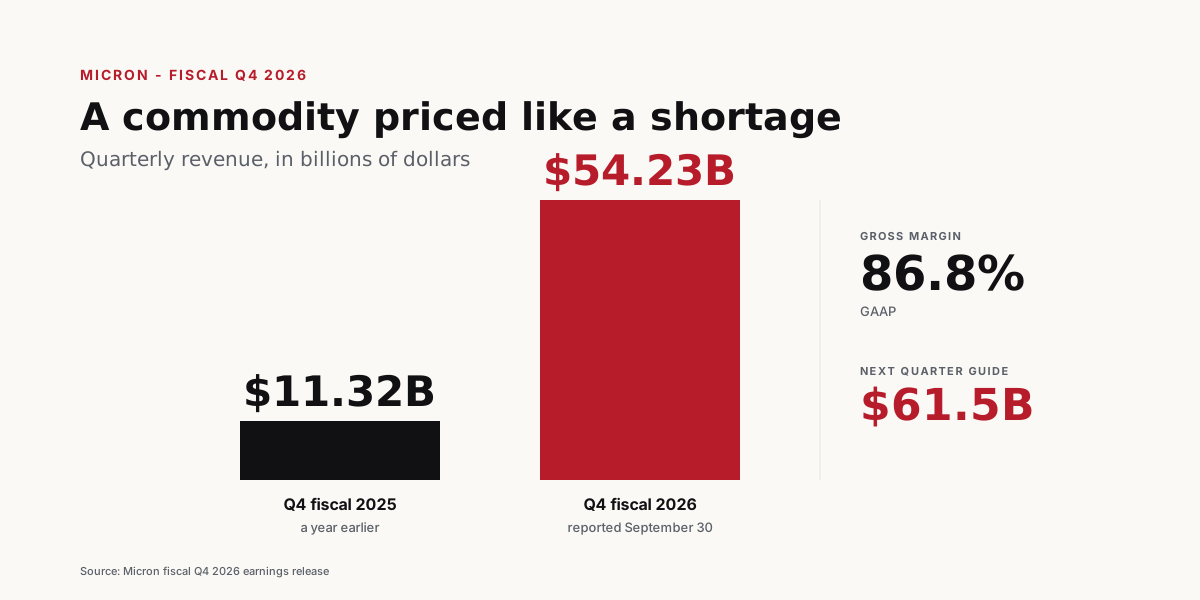
Micron reported fiscal fourth-quarter revenue of $54.23 billion on September 30, up from $11.32 billion a year earlier, per its earnings release. GAAP gross margin was 86.8%. Fiscal 2026 revenue came to $133.19 billion against $37.38 billion the year before. The company guided to $61.5 billion for the current quarter, plus or minus $1.5 billion.
An 86.8% gross margin on a commodity part is a shortage price. Memory makers spent decades earning a fraction of that. On the call, Micron said supply will be much tighter in calendar 2027 and 2028, with both DRAM and NAND constrained through both years, per Hardware Busters. It has contracted the vast majority of its 2027 high-bandwidth memory supply at higher prices. Customer contract liabilities reached $12.9 billion on the balance sheet.
New supply is slow. Micron's Singapore plant starts production in early 2027. The Idaho fab begins wafer output in mid-2027, a Japan expansion follows in late 2028, and New York's first wafers come in 2030. Capital spending was $27.37 billion in fiscal 2026 and is set at about $25 billion for the first half of fiscal 2027 alone. DRAM prices rose in the high teens last quarter. NAND rose about 30%.
AI server builders with long contracts absorb this first. Everyone else buys what is left. PC and phone makers are raising prices on memory-heavy configurations, and smaller hardware companies without supply agreements pay spot. The first relief on Micron's own schedule is the Idaho ramp, and that is about nine months out.
Bottom Line
Micron sold $54 billion of memory at an 87% margin and says 2027 and 2028 get tighter. If your product ships with DRAM or flash, lock 2027 supply in writing this quarter and price your bill of materials for increases through at least mid-2027.