
TSMC reported third-quarter revenue of $46.72 billion on October 15, up 41.2% from a year earlier and above the top of its own guidance, per TSMC. Net income rose 68.7% to NT$763.06 billion. Gross margin was 66.4%. The 2nm process made up 8% of wafer revenue.
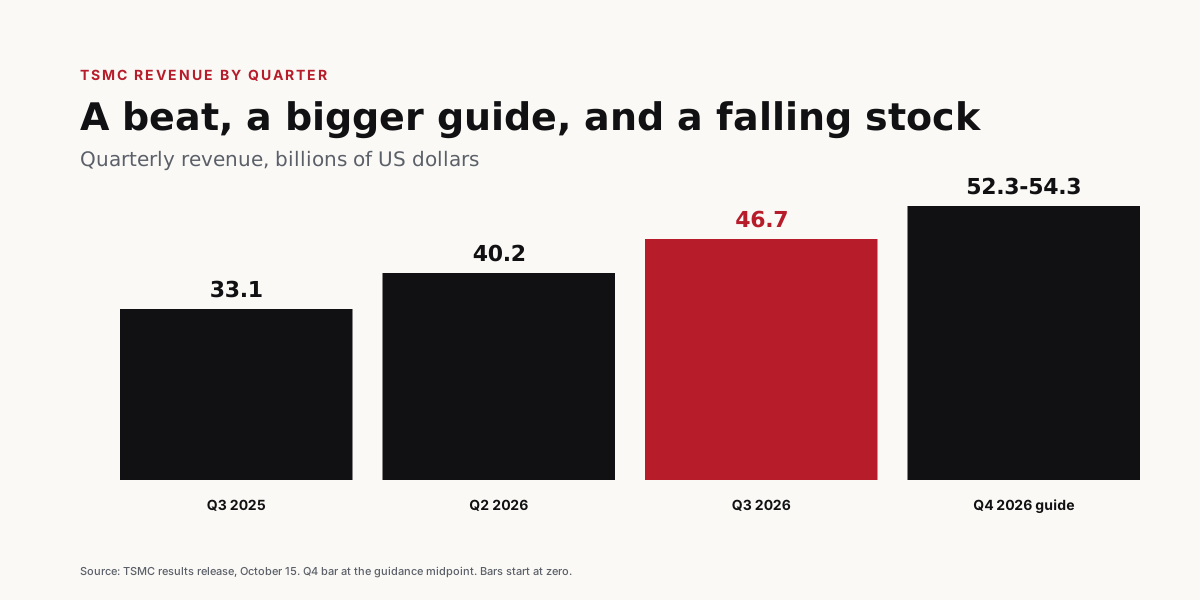
Fourth-quarter guidance is $52.3 billion to $54.3 billion, about 14% above the third quarter at the midpoint. Full-year growth is now about 44% in dollars, per the earnings call. Capital spending stays at $60 billion to $64 billion this year. Management said spending from 2026 to 2028 will be significantly higher than in the prior three years. High-performance computing, the segment that includes AI chips, was 68% of revenue.
Demand is not the constraint. C.C. Wei said AI demand still runs above supply and that TSMC's forecast for AI accelerator growth "probably will be higher." 2nm capacity should more than double in 2027. TSMC expects its overseas fabs to cut gross margin by about 3 to 4 points over the next few years, and it said tool prices are rising. ASML said the same about its own prices the day before, which we covered on October 14.
The stock fell anyway. TSMC dropped 2.0% in Taipei and its US shares 1.8%, per Seoul Economic Daily, as the 20 largest AI and chip stocks lost about $1 trillion over four sessions, by CNBC's count. Nvidia lost about $291 billion of that. The selling ran on fears of higher rates for data center borrowers and a Chinese memory challenge, which we covered on October 13.
Bottom Line
TSMC beat its own forecast, raised the year, and said demand still exceeds supply, and the market sold it with everything else. If you buy leading-edge capacity, book 2027 early, because tool prices and overseas costs are rising. If you hold the stock, watch how its customers say they will finance data centers this earnings season. That drove the drop.