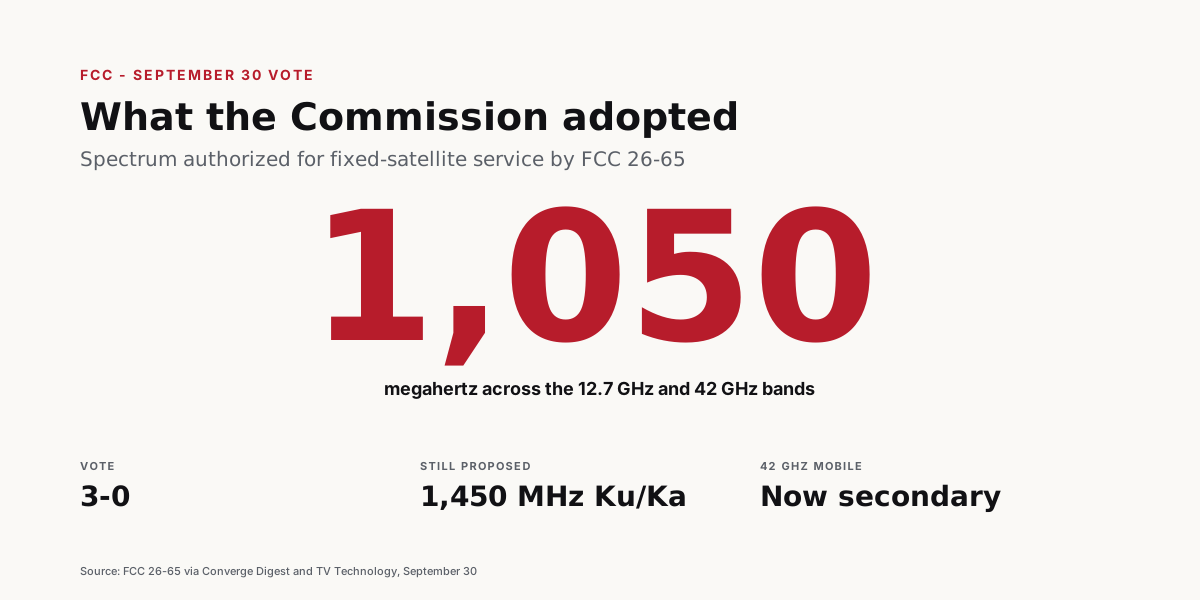
The FCC adopted its satellite spectrum order on September 30 as FCC 26-65, with Chairman Brendan Carr and Commissioners Anna Gomez and Olivia Trusty all approving, per Converge Digest. It authorizes fixed-satellite service in 550 megahertz at 12.7 to 13.25 GHz and 500 megahertz at 42 to 42.5 GHz. That is 1,050 megahertz in total.
The Report and Order is enacted. Everything else is proposed. The Further Notices seek comment on 1,450 megahertz in the Ku and Ka bands and 138.25 gigahertz in the D band, per TV Technology. The Ku and Ka figure grew from the 1,175 megahertz on the tentative agenda we previewed on September 25. A second notice covers spectrum for spacecraft control and for in-orbit servicing, refueling, and manufacturing.
In 12.7 GHz, satellites get both uplink and downlink. That covers gateway and feeder links, earth stations on aircraft and ships talking to geostationary satellites, and downlinks from low-orbit systems to blanket-licensed user terminals. In 42 GHz, the downlinks go to individually licensed gateways under a light-licensing approach. Terrestrial fixed service keeps primary status there. Terrestrial mobile drops to secondary.
That last change answers the question our preview raised about carrier interest in 42 GHz. Mobile operators can still use the band, and they must accept interference from the primary services to do it.
The Commission also adopted its NEPA item and opened the ultra-wideband rulemaking at the same meeting, per Via Satellite. Amazon and SpaceX backed the spectrum order. Comment deadlines for the Further Notices run from Federal Register publication, and the coverage we reviewed gave no dates.
Bottom Line
The 1,050 megahertz is settled, and the 1,450 megahertz in Ku and Ka is still a proposal. Satellite operators can plan gateways in 12.7 and 42 GHz now. Anyone with a stake in Ku, Ka, or D band should watch the Federal Register for the comment clock.