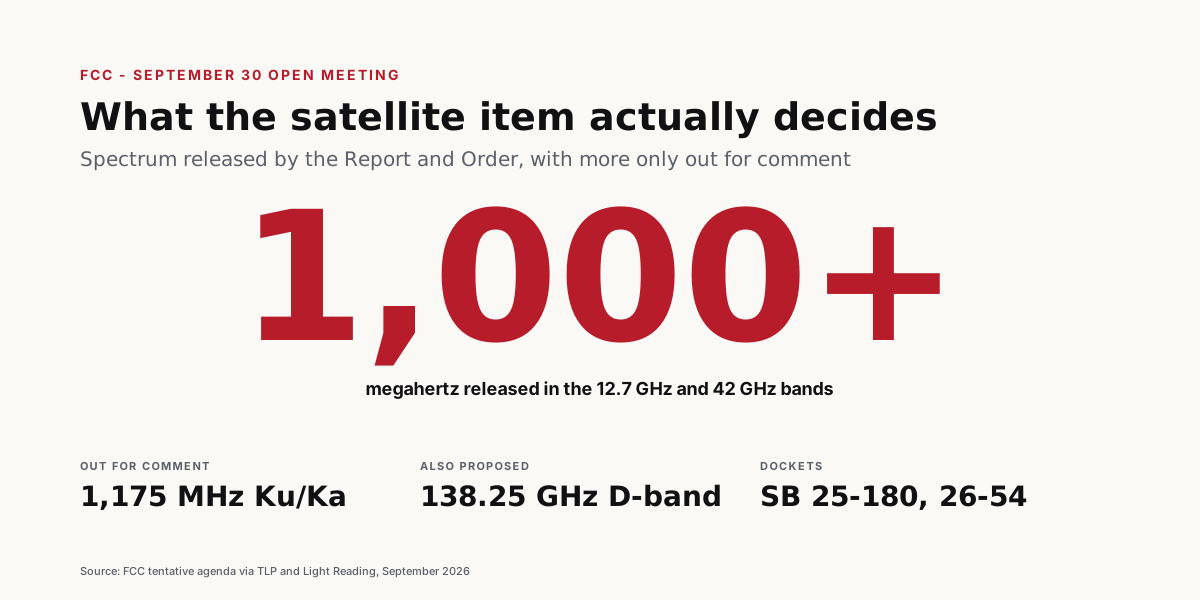
The FCC's September open meeting is set for September 30 at 10:30 a.m., with an item titled Unlocking Satellite Spectrum Abundance on the agenda, per Telecommunications Law Professionals. It carries SB Docket Nos. 25-180 and 26-54, GN Docket Nos. 14-77 and 22-352, and WT Docket No. 23-158. The package would release more than 1,000 megahertz across the 12.7 GHz and 42 GHz bands for satellite broadband, including service to homes, aircraft, and ships, per Light Reading.
Read the item types before the headline number. Only part of the package binds. The satellite item is a Report and Order, an Order of Proposed Modification, and two Further Notices of Proposed Rulemaking. The Report and Order sets rules on September 30. The Further Notices only open comment, including the proposal to add 1,175 megahertz in the Ku and Ka bands and 138.25 gigahertz in the D band. Existing licensees should start with the Order of Proposed Modification, since a modification changes terms on licenses already granted.
The 12.7 GHz band has been contested for years. GN Docket 22-352 was opened to examine the band for mobile broadband, and carriers argued for it as mid-band capacity. Pointing it at satellite settles that fight for now. The 42 GHz band draws interest from T-Mobile and Charter for terrestrial sharing, so the sharing rules the Commission adopts will decide how much of the band stays usable on the ground.
Two other items on the same agenda matter for builders. An NPRM in ET Docket No. 26-245 would rewrite the Part 15 rules for ultra-wideband devices, the first comprehensive update since 2002, and add a category for AI-enabled sensing. A Report and Order in WT Docket No. 25-217 would narrow NEPA review for wireless deployments, covering more than 14,800 builds. Both are procedural changes that surface later as shipping dates and permit timelines.
Bottom Line
Only the Report and Order binds anyone on September 30. If you build satellite capacity, in-flight connectivity, or UWB hardware, check the item types in the agenda and file into the Further Notices, because the Ku and Ka proposal is still open and comment windows are where those get settled.